

Episode summary:
I travelled to the wilds of northern Minnesota to see the first few feet of the Mississippi River as it is born from Lake Itasca and begins its long journey south to the Gulf of Mexico. Up here, near America’s border with Canada, the forests seem to stretch forever, skirting lakes and streams, and housing all manner of flora and fauna.
If you’re wondering ‘where does the Mississippi River begin and end’ or ‘where is the true start of the Mississippi river’, this podcast can help answer those questions and it might inspire you to visit the natural beauty of Minnesota.
Listen to a podcast about watching the birth of the Mississippi River.
Transcript – S1 E10: Watching the birth of the Mississippi River
This week, we’re watching the summer dawn mist rise from the source of a mighty North American river.
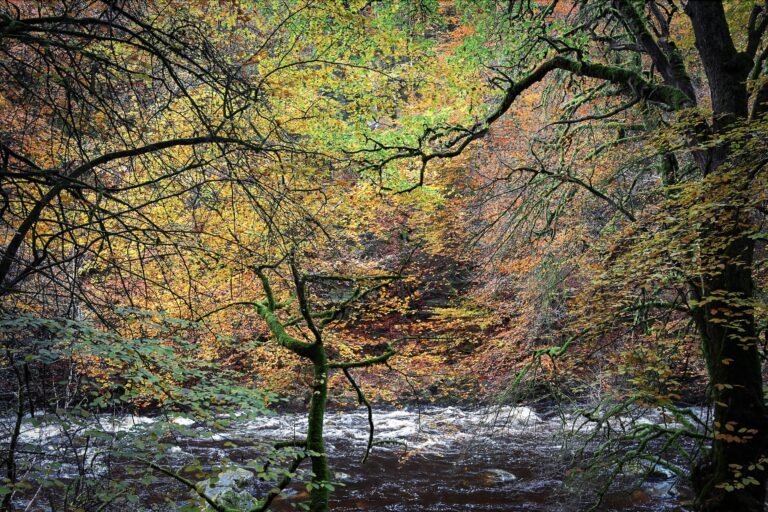
I’m standing barefoot and ankle deep in slow-flowing fresh water. Under my feet are smooth stones and I feel like I’m walking on a reflexology path in a very elaborate outdoor spa. Behind me somewhere, hidden by the mist hanging over the lake, loon birds are calling. It’s a slightly haunting sound and one that has – oddly – been sampled on a number of ambient house and trance tracks over the years. I hope the loons got paid a royalty.
It’s also a sound that I immediately associate with these lonely and wonderfully wooded tracts of Minnesota and the wider, wilder regions of northern America and southern Canada. There’s space to breathe here, a chance to be alone and at one with the natural world. An opportunity to take in good clean air and focus on the way the sun arcs over the sky, flooding the forests with light and life.
A river’s humble beginnings
The water trickling around my feet may not know it but it is special, for I am standing on the boundary of two very important natural landmarks. Behind me is Lake Itasca and in front of me the very first few inches of the Mississippi River. It’s a stream really, less than 20 feet or six metres wide, burbling over rocks and flowing away slowly, reluctantly maybe. From this humble beginning, the water will, in the weeks and months to come, join other streams and tributaries to become one of the mightiest rivers in the world. At times, in its lower reaches, it will be a mile wide. It will flow through ten states and the big cities of Minneapolis–St. Paul, St. Louis, Memphis and Baton Rouge, past millions of people’s front doors, until it finally reaches its destination – the Delta, south of New Orleans, where it empties into the Gulf of Mexico.
I can hardly imagine all that standing here at its birth. I’m not a parent, but I feel myself being protective of these innocent headwaters, not wanting them to grow up and have beer bottles and shopping bags thrown into them, fearing for their health as they age and get murkier and dirtier, and discover more about how careless us humans can be. Instead, I want them to stay here, stay young, clear and carefree. Impossible, of course. Without these waters constantly flowing, there would be no Mississippi. There would be no life along its banks, no hanging sphagnum moss on oak trees gracing horseshoe bends in Louisiana, and no bird havens across the Delta. It’s all connected. And for a few minutes, I am too.
Wonderfully natural
I feel something else – the temporary thrill of being at one of nature’s extremities. Maybe it’s the geography nerd in me but I get a real kick out of being at the start or end of a river, the most northerly or southerly point of a continent, or the most easterly or westerly for that matter. It’s especially exciting when you see a river being born, such as this one, and witness the continuity of nature. Rain falls into Lake Itasca. Lake Itasca spawns the Mississippi River, which helps top up the Gulf of Mexico, etc., etc. Onwards, ever onwards, beautifully predictable and wonderfully natural.
I made sure I was the first person into the National Park this morning, so I could commune with the river before the crowds arrived. But now, an hour on, there’s still nobody else here. The mist has all but lifted, revealing the curtain of pine and birch trees that fringes it, and the expansive boreal forests beyond. I can see the true size of the lake now – much bigger than I thought. The loon birds’ calls are more distant and I see a group gliding in for a landing on the water.
There’s an entire river to explore south of here. But right now, I don’t want to go anywhere, and I don’t want to do anything but watch and listen to this little stream. I reach down and scoop a handful of water, with which to anoint my head. A self-baptism in nature.
A car engine in the distance tells me other visitors have entered the park and my dawn reverie is nearly over. I’ve been so lucky to have the headwaters to myself for so long. I say my goodbyes to the lake and to the river, wishing its young waters luck, and telling them I’ll catch up with them further downstream.
© copyright Matthew Brace