
Episode summary:
The Vallée d’Ossau is full of summer radiance on the day I come to stay. I and several hundred other people and their huge motorhomes, for the famous Tour de France bicycle race is passing through the valley. After the mass of riders and their entourages whizz by and on, into the foothills of the Pyrenees, the valley returns to its natural, beautiful best.
If you’re keen to find out ‘does the Tour de France go through the Pyrenees’, ‘is the Vallée d’Ossau worth visiting’ or ‘what is the most beautiful part of the Pyrenees’, this podcast episode might provide some food for thought.
Listen to a podcast about watching the thrilling Tour de France whizz through an idyllic mountain valley.
Transcript – S4 E3: Tour de France, up close
This week we’re in a wonderful valley in the foothills of the Pyrenees waiting for a rather special race to pass by.
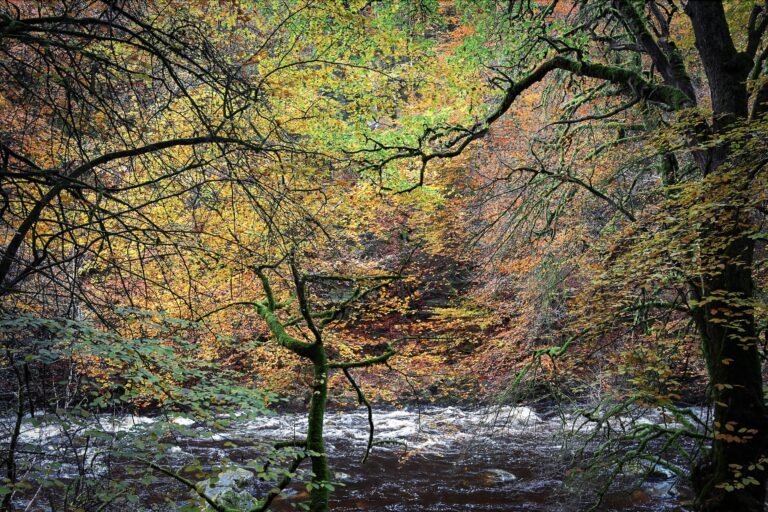
The Vallée d’Ossau is full of summer radiance. The river of the same name is burbling merrily, fresh from its birthplace in the nearby Pyrenees. A man painting the shutters on his house in the hamlet of Béon tells me to watch for cincle plongeurs – white-throated dippers – who love to hang out on the rocks just north of the small road bridge. He is right. I have barely sat long enough to finish my croissant before not one but two dippers appear and start their cute half-dipping, half-bowing dance. It’s the perfect brunch entertainment.
From my idyllic perch on the riverbank I can see the valley walls rising steeply into the sunshine, evidence that a mighty ancient glacier once carved its way through here.
Today the valley is a haven for wildlife: there are red squirrels here, in the woods at lower altitudes and the forests higher up. Higher still are Alpine marmots, descendants of the population that was reintroduced here in the 1940s.
Way above everything a vast griffon vulture wheels. It is one of the largest birds in the air, with a wingspan that can be as broad as 2.8 metres – that’s more than 9 feet across.
I am delighting in observing much smaller birds in a hedgerow, chirruping and flitting about, when a car horn reminds me of the real reason I am here. I walk back from the bridge to a traffic roundabout which connects the side road from Béon to the main road through the valley – the D934, if you’re interested. The laybys and grass verges of the D934 are covered with vans, motor homes and rented Peugeots.
People have put up sun awnings and set out camp chairs and tables. They are halfway down bottles of wine and busy consuming quarter-wheels of cheese, slabs of pâté and plates piled high with bread. Some have elaborate cameras on tripods, holding lenses that look long enough to take close-ups of villages in the next valley, let alone this one.
One man has escaped the crowd and is sitting in the grass down the road, reading a newspaper in peace.
We are all waiting for the Tour de France.
Seeing Le Tour for real
I’m addicted to Le Tour and watch most of it every year on TV but not for the reasons you might think. I’m not really sure who’s who among the riders, which teams they are racing for, or how they score points. I watch it solely to see France’s stunning countryside from the comfort of my armchair.
There is less countryside footage these days and more focus on handlebars, spokes and sweaty legs but it’s still worth watching to see those fabulous aerial vistas. From one of the Tour’s TV helicopters, even a soggy field in Normandy looks inviting.
However, this is the first time I am seeing a stage live, en France!
The Tour cognoscenti nod or wave to each other subtly as if they are members of a secret society. Some take it very seriously, adorning their motorhomes with flags and wearing matching t-shirts to show their loyalty to a particular team. These are the die-hards, the tour faithful. They drive the entire route of the race so they are on-site each day to watch every stage.
One retired couple tells me their daughter works for one of the teams, in marketing, and they spend each July following the tour to cheer her and her team on. They give me a pain au chocolat, which, thankfully, does not have the team logo on it.
The blur and the silence
Soon there is commotion in camp. “Allez, allez,” one man shouts. Race radio has announced the approach of the riders.
Anticipation levels rise. The thrum of TV helicopters can be heard in the distance. Baguettes and cheese are hastily packed away, wine bottles re-corked, awnings rolled up in record time. The tour faithful are preparing to wheel-spin their Winnebagos out of there the minute the last rear-guard motorbike gendarme has passed. On to the next stage.
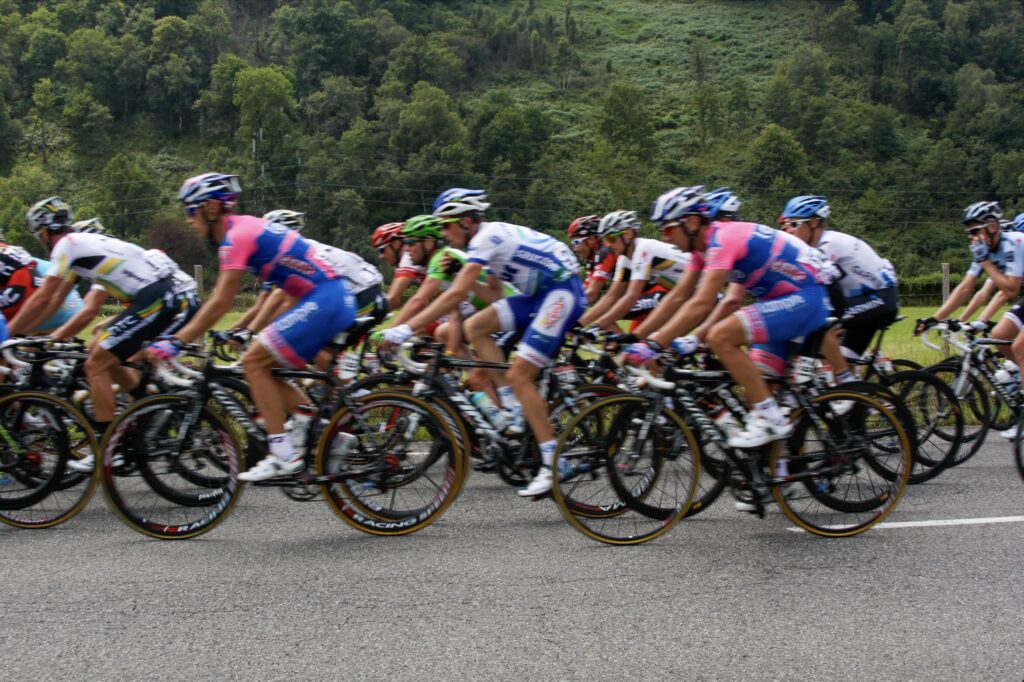
There in the distance is the peloton. In seconds it is upon us, a whir of spokes, legs and helmets. The riders are within centimetres of each other, slipstreaming to save every bit of energy for the exhausting climbs ahead. After clearing this valley, they will start the gruelling pull up the Col d’Aubisque, a mountain pass that rises to 5,600ft or 1,700m. Most of the teams are bunched up and pass by in blurs of green, blue and lurid pink.
In less than a minute it is over. The blur disappears into the distance and the faithful begin lumbering off in their motorhomes.
I linger to watch the valley return to its quiet, unassuming self. A Pyrenees zephyr picks up and rustles the summer leaves, while the river burbles on under ancient bridges, over smooth grey stones and past ever-vigilant dippers. The residents of Béon begin to emerge, opening shutters and peering out to see if the hoard of strangers has finally moved on and left them in peace.
Only a slightly dented rider’s water bottle on the grass verge reveals the recent passing of the world’s most famous bicycle race.
© copyright Matthew Brace