As beach houses go, Thorfinn the Mighty’s is a cracker. Absolute waterfront. Views for miles. White-sand beaches. Great fishing. Sauna. The tide washes in twice a day to cover the causeway from the mainland, turning the location into a private island.
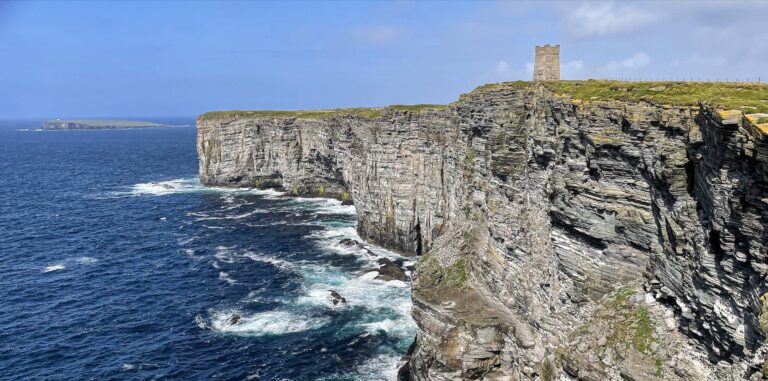
It’s spectacular, or at least it was 1,000 years ago. Only its stone foundations remain, partially overgrown by grass, but in its day it was a right royal residence. Perched on a speck of land called the Brough of Birsay, on the west coast of Scotland’s Orkney Islands, this was the power base of Earl Thorfinn. He ruled these islands, as well as nine earldoms on the Scottish mainland and much of Ireland.
Sitting on the grass in one of the former rooms of this seaside palace, I felt a powerful connection to my ancestors. Recently, when a DNA test came back peppered with markers from Scotland and Scandinavia, I discovered I am descended from Vikings. The Brough of Birsay was the perfect spot to channel my inner Viking.
“Orkney’s remarkably well-preserved archaeological and historical sites reflect over 5,000 years of human interaction with the island landscape. The islands have one of the highest concentrations of ancient sites in Europe and exciting new discoveries are continually being made.” orkney.com
After wandering through the remains of the settlement – including a space that once housed an ingenious sauna heated by beach pebbles – I headed up the slope to the cliffs. As I approached there was a crescendo of shrieks and cries. Orkney is one of the world’s most important seabird sanctuaries, with thousands of birds flocking here every spring to mate and to nurture their young.
Arriving on the clifftop was a bit like walking into a garden party in full swing. Everyone was there. Razorbills and kittiwakes hurled themselves off narrow ledges and shot down to skim along the tops of the waves. Puffins flew past sideways, looking wildly out of control and making comical, clumsy landings near their clifftops burrows.
“Towering sea cliffs are home to thousands of birds – puffins, guillemots, gulls, gannets and kittiwakes can all be seen here – while our marshlands and sweeping moorlands are natural habitats for the likes of curlew, red-throated divers, hen harriers and other birds of prey.” orkney.com
Shag chicks sat on nests like cossetted royal children, fed relentlessly by doting parents. Great skuas patrolled the scene menacingly, looking for food to steal, while gannets did their best kamikaze impressions, diving hundreds of feet straight down and smacking into the waves to catch fish.
Fulmars snuggled up together, appearing slightly aloof as they looked down on the mad antics of the others. On the wing, these are possibly the most majestic of all the Birsay residents. Within minutes of me dangling my feet over the cliff, a young fulmar swooped over my head and hung there on the breeze just a few feet away, as still as a drone. We watched each other until the bird was satisfied I was no threat and it soared away majestically.
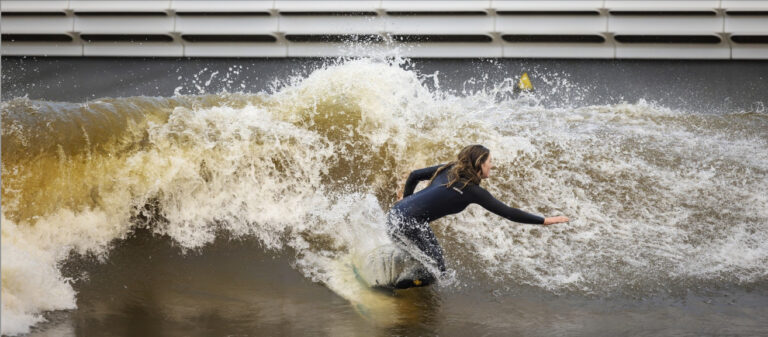
I’m going to be stuck in Edinburgh airport, waiting hours for my connecting flight. I’ll have to camp out in a soulless burger joint or twiddle my thumbs at an empty departure gate. “Or, you could go for a surf,” my Scottish friend told me. Yes, a surf. Within 40 minutes of clearing immigration I was catching some waves, then warming up in a poolside sauna and re-fuelling with delicious food and a local whisky cocktail.
This is Lost Shore Surf Resort and it’s one of the best airport stopover idea for years.
It’s Europe’s largest wave pool. There are two pools actually, each with its own wide wave, providing brilliant options for surfers of all abilities. The more experienced can catch them as they break out the back while newbies can play safe and get their ‘surf legs’ in the shallows.
Lost Shore is the brainchild of local surfing fanatic Andy Hadden and has welcomed thousands of people since it opened in 2024, including tonnes of passengers desperate to do something – anything – rather than twiddle their thumbs at Edinburgh airport.
Get ready for wildlife, woodland walks and wee drams
This article first appeared in Luxury Travel magazine on 11 November 2025 and includes tips on where to visit in Scotland in autumn.
From heather-strewn glens to golden forests and white-sand beaches, the small but perfectly formed nation of Scotland is alive with natural wonder and an abundance of wildlife.
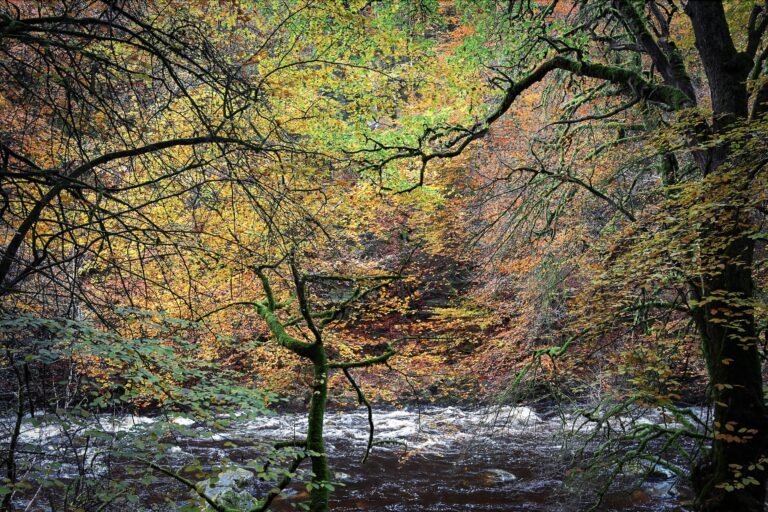
The beech and oak woods of Dunkeld and Birnam are ablaze with millions of ochre and flame-yellow leaves. The light filtering through these curtains of colour feels almost beatific. As I stroll to the stone Hermitage Bridge to watch salmon leaping up the Falls of Braan I am almost smug. “Scotland in autumn will be dark and miserable,” my friends scoffed. If they could see me now.
To get here I drove side roads that resembled those featured in TV car adverts, with jaw-dropping vistas around every corner and gold and cinnamon blizzards of leaves whirling in the rear-view mirror. I’ve visited Scotland countless times, but I’ve never seen it so vibrant. This riot of colour is being repeated right across the highlands and islands for these few joyous weeks of autumn, with Perthshire and Aberdeenshire vying for the Most Spectacular Leaves award.
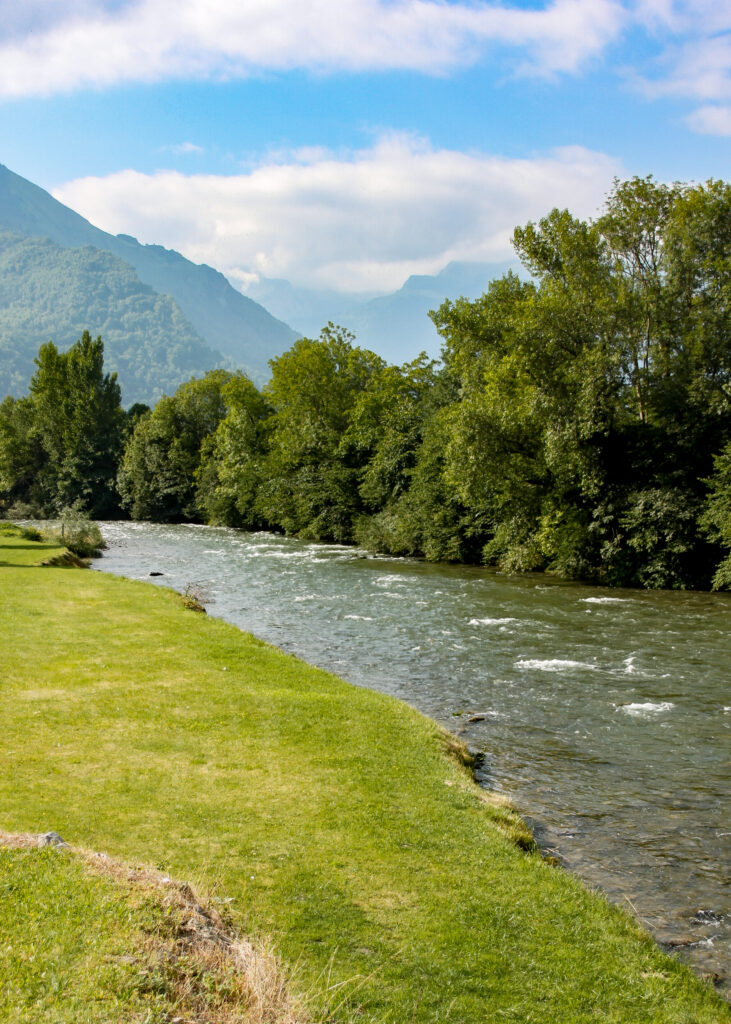
The Vallée d’Ossau was full of summer radiance that morning. The river of the same name was burbling merrily, fresh from its birthplace in the nearby Pyrenees. Either side of its flood plain the valley walls rose steeply into the sunshine.
The main road through the valley—the D934, if you’re interested—was almost deserted but at the roundabout near the hamlet of Béon, the laybys and grass verges were covered with vans, motor homes and rented Peugeots.
People had put up sun awnings and set out camp chairs and tables. They were halfway down bottles of wine and busy consuming quarter-wheels of cheese, slabs of pate and plates piled high with bread. Some had elaborate cameras on tripods, including lenses that looked long enough to take close-ups of villages in the next valley, let alone this one. One man had escaped the crowd and was sitting in the grass down the road reading the newspaper in peace.
I’m addicted to Le Tour and watch most of it every year on TV. I’m not really sure who’s who among the riders, which teams they are racing for, or how they score points. I watch it to see France’s stunning countryside from the comfort of my armchair.
There is less countryside footage these days and more focus on handlebars, spokes and sweaty legs but it’s still worth watching to see those fabulous aerial vistas. From one of the tour’s TV helicopters, even a soggy field in Normandy looks breathtaking. I had never witnessed a stage live, en France, so I decided to leave the living room and get close to the action.
Many of those waiting in the Vallée d’Ossau nodded or waved to each other subtly as if they were members of a secret society. Some took it very seriously, adorning their motorhomes with flags and wearing matching t-shirts to show their loyalty to a particular team. These were the die-hards, the tour faithful. They drive the entire route of the race so they are on-site each day to watch every stage.
One retired couple said their daughter works for one of the teams, in marketing, and they spend each July following the tour to cheer her and her team on. They gave me a croissant, which, thankfully, did not have the team logo on it.
Soon there was commotion in camp. “Allez, allez,” one man shouted. Race radio had announced the approach of the riders. From the roundabout, we had a view for most of a mile along a straight stretch of the D934, down which the race would soon hurtle.
Anticipation levels rose. The thrum of the TV helicopters could be heard in the distance. Baguettes and cheese were hastily packed away, wine bottles re-corked, awnings rolled up in record time. The tour faithful were preparing to wheel-spin their Winnebagos out of there the minute the last rear-guard motorbike gendarme had passed. On to the next stage.
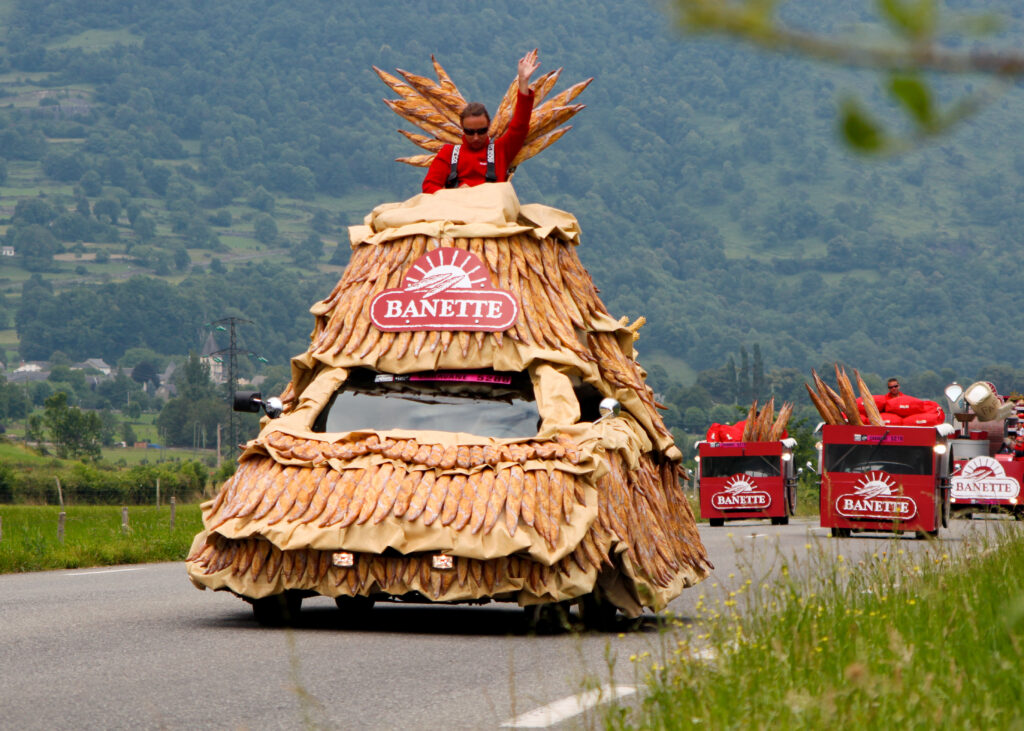
What you don’t see on the TV is the ‘caravan’ that precedes the riders and which presumably funds the whole thing. These are the sponsors, who attach elaborate constructions to cars and vans to promote their products. First through the Vallée d’Ossau were some giant plastic bottles advertising the official water supplier to the race. These were followed by some huge wheels of cheese, cartoon characters and oversized mobile wheatsheafs, presumably advertising the race’s official bread provender.
Promo girls and boys sat inside or on top of these contraptions, waved eagerly and liberally distributed free samples; so liberally that as I was distracted taking photos, one of the girls hurled a muffin at me with such accuracy that it struck me in what I imagine a Frenchman might call his ‘noisettes’.
The girl was very apologetic, holding her hands to her face and shouting “pardon, pardon” but the accuracy of her throw and the site of an Englishman doubled over in pain on the grass verge was too much for her promo chums. They were in hysterics.
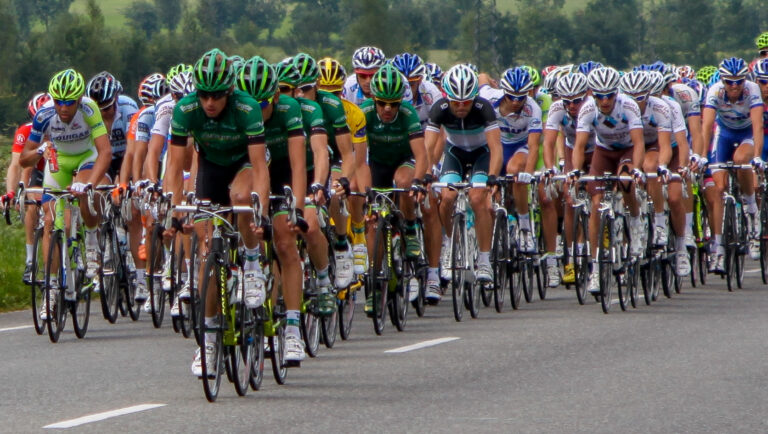
I just had time to catch my breath and wipe the tears from my eyes before the tour faithful cheered and there in the distance was the peloton. In seconds it was upon us, a multi-coloured whir of spokes, legs and helmets. The riders rode within centimetres of each other, slipstreaming to save every bit of energy for the exhausting climbs ahead. After clearing the valley, they start the gruelling pull up the Col d’Aubisque, a mountain pass that rises to 5,607ft (1,709m).
Most of the teams were bunched up and passed by in blurs of green, blue and bubblegum pink. However, despite their collective speed, a remarkable number of riders chatted with each other as if it was nothing more than a gentle Sunday pedal.
In less than a minute it was over. The blur disappeared into the distance and the faithful began lumbering off in their motorhomes.
I lingered to watch the valley return to its quiet, unassuming self. A Pyrenees zephyr picked up and rustled the summer trees, while the river burbled on over its smooth grey stones and under ancient bridges. The residents of Béon began to emerge, opening shutters and peering out to see if the hoard of strangers had finally moved on and left them in peace.
Huge birds of prey circled high overhead, riding the thermals. They were griffon vultures, for which this valley and its La Falaise aux Vautours wildlife reserve are famous.
Only a slightly dented muffin on the grass verge revealed the recent passing of the world’s most famous bicycle race.
Fact File
Where
The department of Pyrénées-Atlantiques is in France’s far south west, sharing a border with Spain’s Basque region.
View of the Legian’s three pools. Photo courtesy of The Legian Seminyak
The best time of day at the Legian Seminyak is when late afternoon gives way to evening.
The sun eases down the sky and lengthens the shadows of the palm trees stretching across the hotel’s perfectly clipped lawns. The emerald grass is soft and cool under bare feet and the frangipani bushes are fragrant.
Most families have vacated the pools and are back in their rooms, parents eager to get kids hosed down in time for an early dinner. Other guests are packing up too, fearing they might have a touch of sunburn, but they’re all going to miss the hotel’s golden hour.
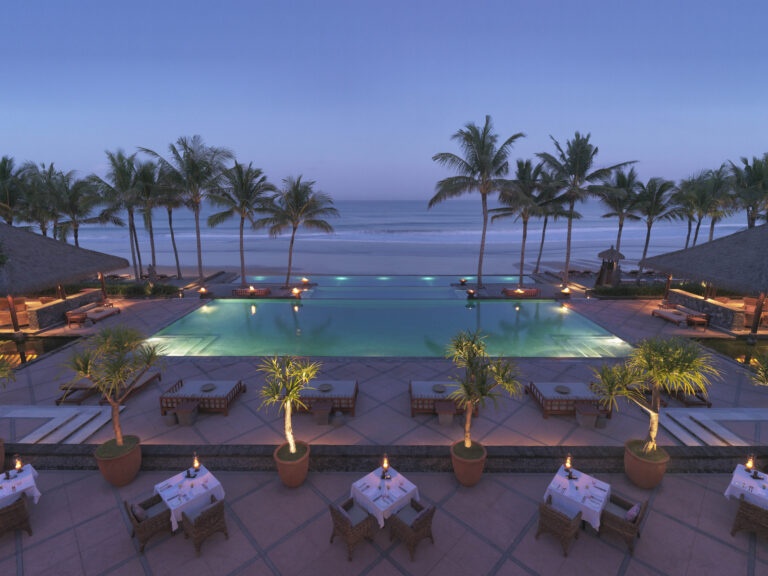
It’s the perfect time for a relaxing float in one of the hotel’s three sublime pools. The pools step down from the restaurant terrace to the beachfront, so you can roll over the dividing walls and flop from one into another, should you feel the need. There’s the main pool, a smaller one in the middle and then the beachside lap pool.
A light breeze picks up, bringing some relief after the still heat of the equatorial day. It heralds the arrival of Legian Seminyak staff offering sticky-rice cakes and other delicious morsels—a free, alfresco afternoon tea. Just the ticket to tide guests over between lunch and dinner.
Other staff members are busy lighting the fire cauldrons. These are large stone bowls around the pools and along the beachfront edge of the hotel. The flames leap into the darkening sky, just as the sun kisses the horizon and turns the sea to liquid gold. It’s cocktail hour and in a few shakes mojitos arrive with which to toast a spectacular day and the prospect of an equally delightful evening.
Evening at The Legian. Photo courtesy of The Legian Seminyak
Cotton drapes around the four-poster bed create a romantic cocoon after dark. Photo courtesy of The Legian Seminyak
Private dining for die-hard romantics. Photo courtesy of The Legian Seminyak
Uppers
Bali has scores of fabulous top-end hotels and resorts but the Legian Seminyak is the cat’s pajamas—and I’ve stayed in and/or reviewed most of the island’s best.
Rooms: All suites have ocean views and the larger ones boast four-poster beds, huge bathrooms, spacious living and dining areas, and wide balconies.
Food: How does grilled snapper in banana leaf sound? Or rack of lamb with a pine nut and rosemary crust, or maybe a wood-fired Jimbaran pizza layered with tuna, squid and king prawns? If the weather allows, dine out on the pool terrace under the Balinese moon.
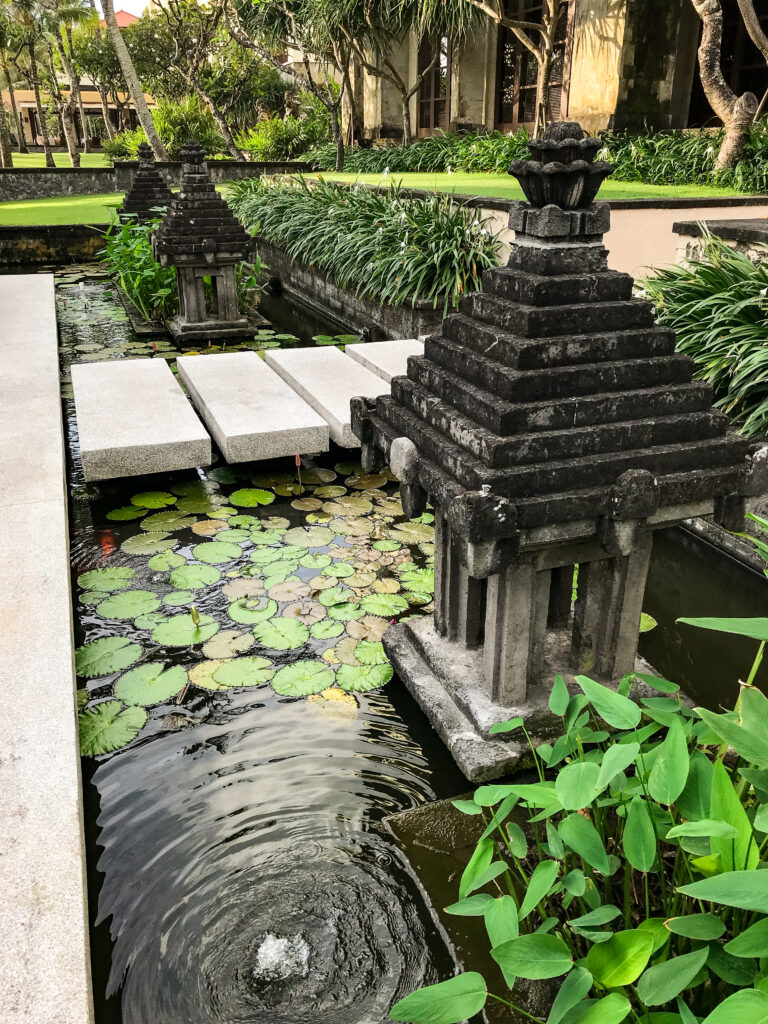
Look and feel: Outside it is a luxe tropical mansion (think Mustique or Miami) punctuated by dramatic, ziggurat-style stone staircases. Inside it’s bona fide Bali chic, with dark-wood floors and a gallery’s worth of Indonesian art. In the evening, two locals sit under a beautiful stone sculpture and play enchanting Balinese music on traditional gamelans.
Downers
The beach is broad and the surf inviting but the stretch of sand can get busy as it’s a popular thoroughfare for joggers, dog walkers, horse riders and trinket sellers. Don’t let that stop you strolling down to the waves and taking a dip, then retreating to the serenity of the Legian.
The good ship Beauty is a 49ft (15m) Windward Islands sloop owned by the wonderful Petit St Vincent private island resort in St Vincent and the Grenadines. When the wind picks up, her amiable skipper Jeff Stevens takes guests out for a sail to some of the stunning nearby reefs and cays.
I have a healthy fear of being on the ocean in anything other than a kayak under my own control yet in just one day Beauty and Jeff gave me new-found confidence.
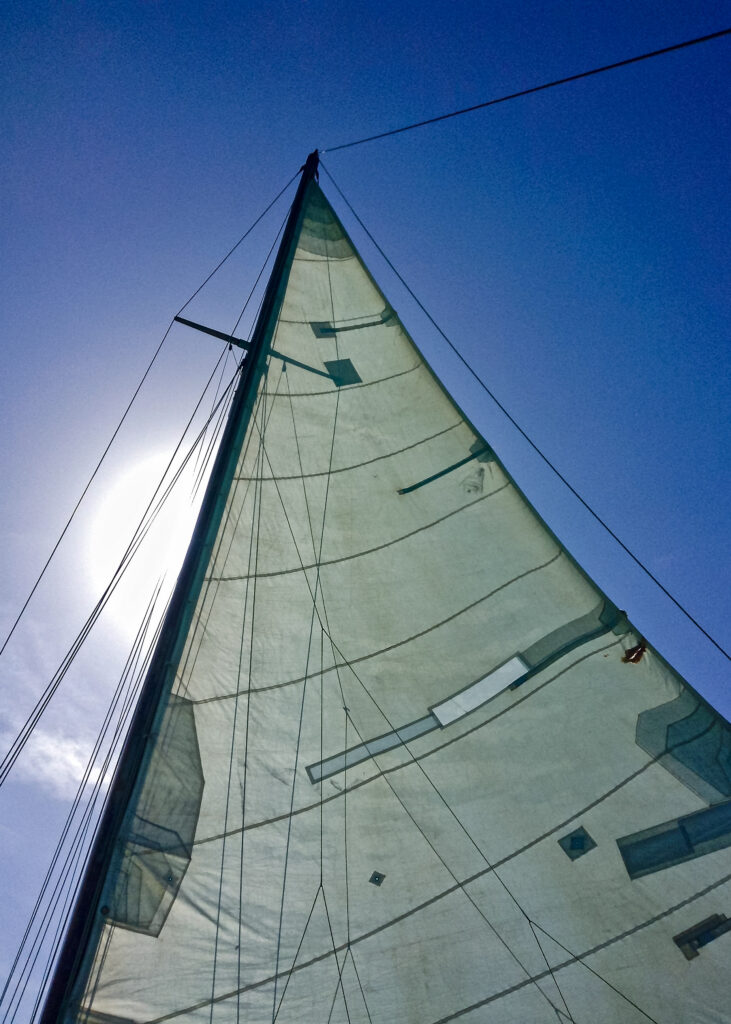
Despite knowing next to nothing about sloops, cutters, schooners, ketches or any kind of marine craft, I felt that Beauty creaked in all the right places as she pranced through the tame Caribbean waves. She had a solidity that made me think only a Category 5 hurricane could hurt her.
She was also something to see. Her sand-white sails and sky-blue decks matched the colour palette of her Caribbean home. From her starboard ropes she proudly flew the green, blue and banana-yellow flag of St Vincent and the Grenadines.
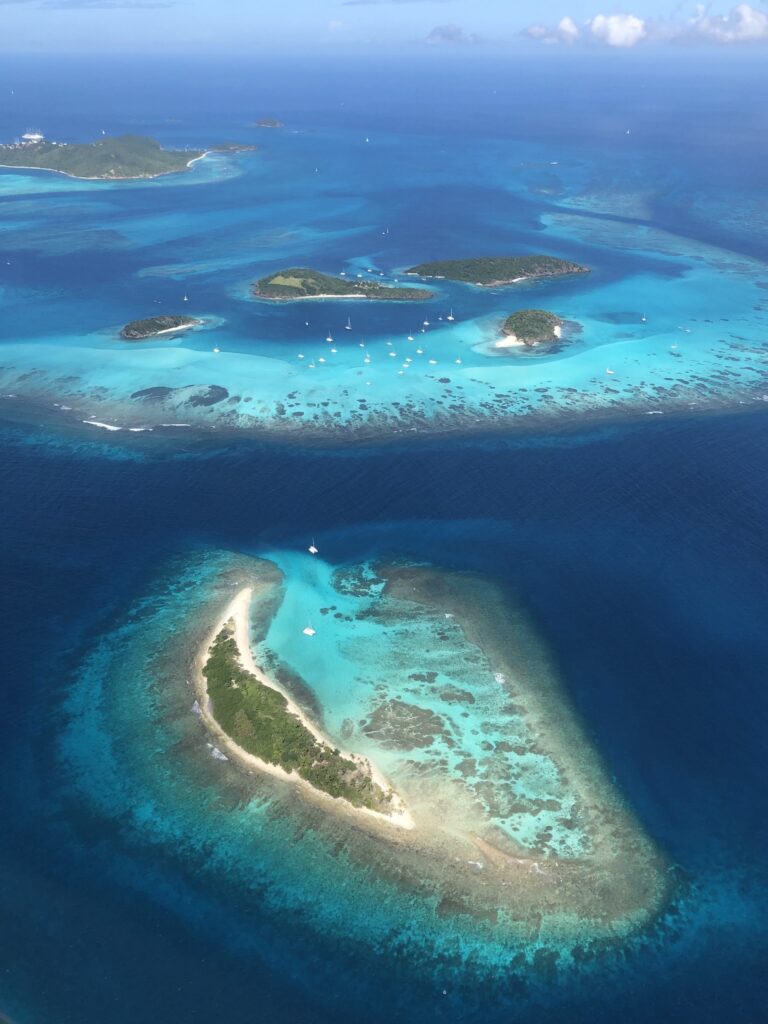
Jeff and I sat at the tiller and cruised north past Union Island and Palm Island, heading for the Tobago Cays. It was a perfect Caribbean February day. The sunshine warmed our shoulders and shone through the crystal-clear waters, illuminating white sandbars and emerald reefs, just feet beneath the surface. A thin scattering of ribbed cirrostratus clouds rode high up in the sky and there was just enough breeze to keep us moving at a steady clip. Beauty passed modern yachts and a couple of muscly speedboats but none of these had her class and breeding.
An hour or two later—time becomes less and less important the longer you spend in the Caribbean—we were lowering the sails and anchoring. The wind had dropped and all we could hear was the comforting slap of wave on hull. Cast your mind back to the scene in Pirates of the Caribbean: The Curse of the Black Pearl when Captain Jack Sparrow and Elizabeth Swann were marooned on a palm-fringed island. Elizabeth blew up all the rum by throwing it on a bonfire, which prompted Capt Jack’s much-quoted phrase: “Why is the rum gone?” It was filmed here in the Tobago Cays on a tiny, idyllic islet called Petit Tabac.
Since the global success of the film and the Pirates franchise, Petit Tabac has become less idyllic. On the day we showed up, it was pretty busy with visiting yachts—their skippers and passengers doing their best Capt Jack impressions—so we moored to the north of Baracal Cay instead.
I had stressed my passion for snorkelling and Jeff said this was the spot. The Tobago Cays Marine Park was declared a wildlife reserve in 2006 by the government of St Vincent and the Grenadines and it’s known for its turtles, which is what I had really come to see.
I applied mask and fins and threw myself overboard. The current let me drift across the reef using barely any energy. I then swam back to Baracal and around its southern tip to a designated turtle reserve.
The coral was not in the best condition but the other marine life more than made up for it. In an hour I spotted three turtles and swam with one of them into the channel between Baracal and its neighbouring cay Petit Rameau. I kept a safe and considerate distance from the turtle, which was made easier by the clarity of the water. I stayed about 8ft (2.5m) away but could still marvel at the intricate colouring on its shell, lit perfectly by the sunlight. The turtle tired of my attention after a while, waved a flipper and dived too deep for me to follow.
There’s something magical and uplifting about snorkelling with turtles. Something that, at least for me, beats all other aquatic adventures. Maybe it’s their innocence, their gentleness, their grace. Or maybe their wisdom; they have been on Earth for 100 million years—longer than snakes or crocodiles—so they’ve seen a thing of two. Being with them in their habitat must surely melt all but the hardest hearts.
“I thought you’d decided to swim home,” said Jeff when I finally clambered back on board Beauty. I’d been snorkelling for nearly two hours and had completely lost track of time. He was barbecuing lobster and pouring Cuba Libres. Thankfully Elizabeth Swann had not breezed in and blown up the rum this time.
Fact File
Where
St Vincent and the Grenadines is a north-south chain of islands and cays in the Windward Islands in the south-eastern Caribbean.
I’m buried deep in the human throng of Chandni Chowk in Old Delhi on a Tuesday lunchtime. This is one of Delhi’s busiest streets: a bazaar of jewellery and electrical shops, an open market of stalls and a major thoroughfare all rolled into one. Everywhere I look there is colour and activity.
A huge dirty-white sack is heading straight for me at head height. Only at the last minute do I see it is being carried on the shoulders of a diminutive, stick-thin man who is calling out for people to clear a path. I try to move but there’s nowhere to go. There are bodies and carts everywhere. Somehow the man and his sack squeeze past. Despite his burden and the sweat pouring down his face, he smiles.
A young woman with two young children nestled in a shawl slung over her chest comes close and holds out a hand. We’re pushed together by the throng, our bodies unavoidably touching in the crush. I’m sure it’s highly inappropriate but there’s just no choice. I apologise to her but I’m not sure she hears me in the melee.
The heaving flow of the human river separates us as quickly as it brought us together and I see her watching me as we are drawn further apart. If I could reach my pockets, I would give her some small notes but my hands and arms are tucked in close to my chest. I am temporarily turned the wrong way and have to back-pedal to keep up with the tide. A man is listening to full-volume, max-treble, Bollywood music on a handheld radio. Over the din, he speaks to me in a language I do not recognise, as if telling me to spin back around and go with the flow. He reaches out a hand and tugs my shoulder. It does the trick and I’m no longer the backwards-facing, odd-one-out fish in the stream.
I finally find some space to jostle to the edge of the crowd and cling to a metal column holding up a shop front, using it as a shield behind which to rest.
At my feet a paan seller sits cross-legged on the ground. He has a basket with his betel nut leaves and other ingredients to make the chewing tobacco parcels. How it all doesn’t get kicked away by the crowd I don’t know.
All he must see all day is feet, boots and the occasional rat scampering between the human limbs. He looks up at me with eyes that say: welcome to my world. He also has packs of cigarettes and I buy three from him and signal to him to keep the change. I haven’t smoked for a decade but I have to reward his courage somehow.
I see two more sack-carriers in mid-stream. They’re going my way so I push back into the crowd and drop in behind them, keeping step in their slipstream until the road widens and the crowd thins out a little.
Behind me, a man is half-singing, half-yelling. He has somehow pedalled his rickshaw through the mass of people… with passengers on board. He’s the Old Delhi equivalent of a chirpy London cabbie having a moan about the road works up Hackney Wick.
A boy offers me a drink from his juice cart. I pay him and gulp it down. Next to him, an older man is hunched into a hole in the wall, from which he serves small cups of chai. I can barely see his face through the small opening. It’s the world’s smallest café and he is doing a roaring trade.
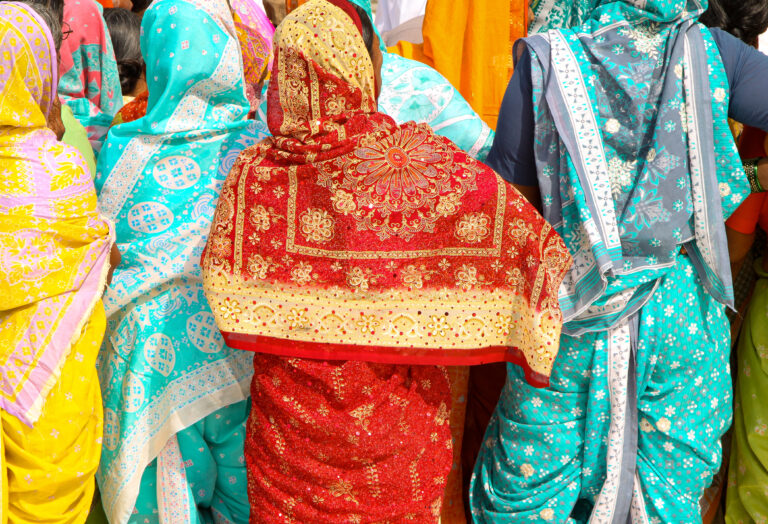
Chandni Chowk is India personified, a microcosm of the nation. The crowds, the dust and heat, the incense and sandalwood. The beedee smoke swirling in the air. The never-ending cavalcade of people and animals and colour. The costumes of almost every religion in India, from Hindu to Buddhist to Muslim, from Jain to Sikh and many more besides. The myriad signs selling everything from books and newspapers to diamonds and sapphires, and the omnipresent noise, from the calls of chai sellers to the grunts of sacred cows and the clatter of rickshaws.
Everywhere, there is evidence of people’s fortitude to get through the day and their ability to smile in the midst of adversity.
To see it first-hand, dive into Chandni Chowk on any busy Tuesday.
Fact File
Where
New Delhi is India’s capital. It is located in the north of the country, with Rajasthan to the south west and Uttar Pradesh the north east, en route to the Himalayas and Nepal.
When to go
Delhi (Old and New) has fiercely hot summers with average highs in May and June hitting 40C (104F). It has a largely dry climate, thanks in part to its proximity to the Thar Desert in neighbouring Rajasthan. July and August are the wettest monsoon months.
More info
Delhi Tourism is the city’s official travel and tourism website.
August in the Rub’ al Khali desert (or Empty Quarter) is not for the fainthearted. It is one of the hottest, driest and most sparsely populated places on earth.
It covers a large stretch of, well, emptiness across southern Saudi Arabia, northern Oman and Yemen, and the western fringe of the United Arab Emirates (UAE). My first visit was to the UAE section in summer with my Emirati friend and colleague His Excellency Hamad Saif Al Mansouri. It was an immense privilege to see this land through his native eyes.
Hamad tore along the highway from Abu Dhabi, stopping only to pray in roadside mosques and shoo away camels wandering nonchalantly across the baking hot asphalt. Once we approached the edge of the desert and the flat lands gave way to the towering dunes he dived off the road and we headed deep into the sand sea.
Mother camel and calf
Artistically sculpted sand dune
Hamad surveys the horizon
Dunes move over the years, of course, but Hamad knew that land as well as I know London’s back streets from Marble Arch to Leicester Square in a blackout on a moonless night.
Every now and then he stopped, got out and ‘read’ the landscape, relying on memory and innate desert navigation skills inherited from his Bedouin ancestors. When in doubt, he gave me a cheeky grin and checked the 4WD satnav. “The old and the new,” he said, “we need both here.”
On our second afternoon we climbed a perfectly sculpted dune. The heat was oven-like and all was calm. We could see for miles, out towards the Saudi border and into the heat haze beyond, where the desert becomes seriously empty. Hamad scanned the horizon silently, reverentially. Despite the great wealth and luxuries that Emiratis have acquired through the UAE’s rapid oil and gas expansion, it is the simplicity of the desert and its connection to their recent nomadic past that really moves them.
Dunes mark the eastern edge of the great Rub’ al Khali
Off road in the UAE desert
Heading back down the dune we dropped into a breathless sand canyon where a camel and her calf were making for a sliver of shade under a ridge. Hamad watched them, remembering similar scenes from his childhood. I was reminded of passages from Arabian Sands, explorer Sir Wilfred Thesiger’s evocative travel narrative about crossing the Empty Quarter. (The book is a must for anyone interested in the Middle East, its landscapes and its people.)
Early morning coffee warmed by campfire embers
Shooing camels from the road as a sandstorm approaches
Back at the 4WD, the dashboard told us the outside temperature had hit 50oC (122oF). It was the greatest heat I had experienced, hotter even than my July drive through California’s Death Valley two years before. Yet, oddly, it was not overpowering. The lack of humidity was the key. The unbearable stickiness that plagues the UAE’s coastal capital Abu Dhabi and second city Dubai during summer can out-soak Miami. On the edge of the bone-dry Rub’ al Khali, however, the heat is crystalline.
That night Hamad and I sat in the moonlight by our campfire, sipping cardamom-infused Arabic coffee, eating dates and talking. I let the warm sand run through my fingers and swore I would return to see more of this intoxicating place.
Fact File
Where
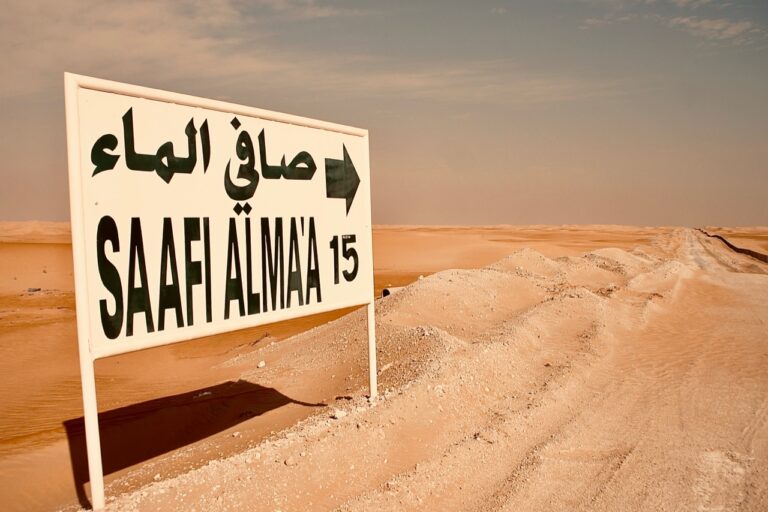
The UAE’s portion of the Rub’ al Khali (or Empty Quarter) is in the west of the country. Head west from Abu Dhabi city on the E11 highway to Al Ruwais then south along the E15. At the southern end of that road is the magical sand sea of Liwa.
Warning
The UAE’s road traffic accident rate is high, the desert searingly hot and distances between towns considerable. Plan wisely, take what you need (including in case of breakdowns), carry no alcohol, tell someone your planned route… and be careful out there.
More info
Visit Abu Dhabi is the official destination site for the largest emirate and the capital city of the United Arab Emirates.
Tasmania is a hiker’s paradise. This heart-shaped island sits 150 miles (240km) off the south east coast of Australia. There is no habitable land south of here until Antarctica, so you really are on the edge of the inhabited world.
More than half of Tasmania is protected by national parks, reserves and conservation areas and almost one fifth has UNESCO World Heritage status. The Tasmanian Wilderness World Heritage Area includes coasts, islands, rivers, peaks, valleys and sub-alpine plains, so your chances of meeting the local wildlifeare high.
These wildernesses are criss-crossed by wonderful walking tracks suited for knapsack novices keen on a gentle stroll as well as fitness fanatics looking for a serious challenge in some of the most remote parts of the southern hemisphere.
The shorter, easier tracks have basic, communal overnight huts (first come, first served) while some have more luxurious private ones with kitchens, hot showers and comfy beds. Personally, I prefer to camp to get that 24/7 nature experience and so you can walk late into the evening and not worry about getting to a hut before everybody else to get a bed for the night.
This is Tasmania’s most popular walk, yet in the spring week I did it I saw barely a dozen people each day. The north–south route runs between Cradle Mountain and Lake St Clair. You can walk it in either direction. You will skirt tranquil lakes, walk through fragrant woods and fern groves, traverse dry scrub inhabited by bright green parrots and cross sub-alpine plains with views for miles.
I saw Bennetts Wallabies in the Lake St Clair forests, two echidnas on moss-swamp boardwalks, a pair of majestic wedge-tailed eagles high overhead and a few black tiger snakes that I left well alone.
I walked it solo and camped but you can join organised walks if you prefer. If you really want some luxury check out the Cradle Mountain Huts, the only private accommodation on the track.
How long? 50 miles (65km); 3–4 days if you have stamina, 5–6 if you want to take it easy.
How hard? Medium with climbs up to sub-alpine plateaus at 4,100ft (1,250m) but you can add difficulty by climbing Tassie’s highest peak, Mt Ossa (5,305ft or 1,617m), or walking the track in winter.
Bruny Island is one of my magic places. It’s where I feel at peace, at one with nature and comfortably disconnected from the rest of the world. It has many sublime spots, Adventure Bay being one of them.
Captain Cook anchored the HMS Resolution here in 1777 to replenish supplies during his third voyage of discovery. Captain Bligh moored the HMS Bounty in this same spot 11 years later, shortly before the famous mutiny in the South Pacific.
The Fluted Cape walk starts and finishes on the beach near the Bruny Island Cruises restaurant (great fish and chips, by the way). You head along the beach and then take a well-trodden forest path at the water’s edge to Grass Point and The Gulch, a narrow stretch of water beyond which lies Penguin Island. You can head back the same way if you want, or follow the path onwards as it climbs up to Fluted Cape. As you ascend from The Gulch, you’ll get spectacular views east to the South Pacific ocean and west over the great expanse of Adventure Bay to The Neck, a sand dune isthmus where, in summer, thousands of Little Penguins breed in burrows scratched out of the dunes.
This walk is a must for nature nuts, mainly because this corner of Bruny Island is home to a small population of very rare albino wallabies. You should see them on the lower parts of the track and near the restaurant car park.
How long? The Fluted Cape circular walk is about 2.5 miles (4km) and should take the average bushwalker about 2.5 hours – more if you stop every few minutes to check out the views, which is highly likely. The section to Grass Point (without doing Fluted Cape) is about 1 mile (1.5km) return.
How hard? Easy to moderate. The section to Grass Point is an easy stroll on the flat. There are some steeper parts on the Fluted Cape section. Take great care near cliff edges, especially in the wet.
Wineglass Bay, Freycinet Peninsula, Tasmania. Photo courtesy of Wineglass Bay Cruises
This is a great year-round option and super flexible. You can do the whole circuit or just day-walk bits of it. It’s all easy—apart from a couple of steep bits—and it’s all stunning!
For an easy day hike from the car park at Parson’s Cove, follow the Hazards Beach Track south around Fleurieu Point to Hazards Beach. Then take the path east across the isthmus to one of Australia’s most Instagram-able beaches: Wineglass Bay. Return the same way or over the low hills known as The Hazards.
I’ve also done a day hike from the car park to Cook’s Beach (south of Hazards Beach) and back. I met a charming Danish couple there who were packing up their tent at Cook’s Beach and about to set off on their twin kayak for another day’s paddling. They said waking there at dawn with the spectacular birdlife all around was amazing. Next time, I’m camping!
How long? Parson’s Cove to Wineglass Bay via Fleurieu Point and returning via The Hazards is about 8.5 miles (14km); return walk Parson’s Cove to Cook’s Beach is about 15 miles (24km). Complete circuit is about 17 miles (28km). On a perfect autumn day, I walked from Parson’s Cove to Hazards Beach, over the isthmus and to the far end of Wineglass Bay, then back over The Hazards, and it took about 8 hours, including numerous photo stops.
How hard? Easy with moderate sections in the hills – the stretch from Wineglass Bay up over The Hazards is a bit steep. Before you walk, check out the information the parks authority has on Phytophthora (or root rot fungus) that threatens Freycinet’s wonderful biodiversity and find out what you can do to prevent it spreading.
Seasons are reversed in the southern hemisphere, with Christmas in midsummer.
Spring (October–November) brings wildflowers, warmer temperatures and snowmelt on higher ground.
Summer (December–early March) is peak season but offers the warmest weather (usually) and longest days for hiking.
Autumn(late March–May) is good for fall colours and fewer people, plus the summer’s produce is harvested so expect even more spectacular meals than usual.
Winter(June–September) is a secret, magical, cosy time here, with much tougher hiking conditions, but the log fires, hot baths and Tasmanian whisky toddies make it worthwhile.
The Northern Quarter wasn’t called the Northern Quarter when I was at university in Manchester in the late 1980s. It wasn’t called anything. Bits of it were known as ‘back of Piccadilly’ or ‘towards Ancoats’ and, to quote the locals, ‘it were right skanky’.
I used to brave its streets to attend gigs at the fabulous Band On The Wall venue. The bar is still going strong but its surroundings look very different. After some clever planning, innovative urban design and a canny rebranding exercise, the Northern Quarter is now Manchester’s hippest ’hood.
It’s a bustling, creative city within a city, which maintains Manchester’s unique gritty-but-friendly identity. It’s full of great pubs, top bistros and cafes, independent record shops, fashion boutiques, art galleries, design stores and a great collection of street art.
The Northern Quarter has studied Manchester’s secrets and improved on them.
Pies ’n’ ale
It was a warm and sunny spring evening when I arrived and the after-work drinkers were embracing the balminess. The bars were packed and people were spilling out onto the pavements.
I wandered in the sunlight down the back alleys until I stumbled on Pie ‘n’ Ale. Manchester is very much a pie ’n’ ale town. Numerous venues serve them, filled with anything from plain old steak to lentil curry and even spiced duck served on a banana leaf.
I tucked in to a delicious venison and Stilton cheese variety, downed a crisp pint of hoppy beer and headed into the city centre to meet a friend. We dropped into some old haunts, including Mr Thomas’s Chop House, which still does fantastic fish and chips, and the City Arms, which still has one of the best selections of local real ales in town.
Next morning, bright and early – about 11-ish – I strolled through the Northern Quarter to find some of its street art. This has largely been the work of a project called Cities Of Hope, which invited leading street artists to create works to raise awareness of social issues. My favourite was an eye-catching piece on Faraday Street by Norwegian stencil artist Martin Whatson.
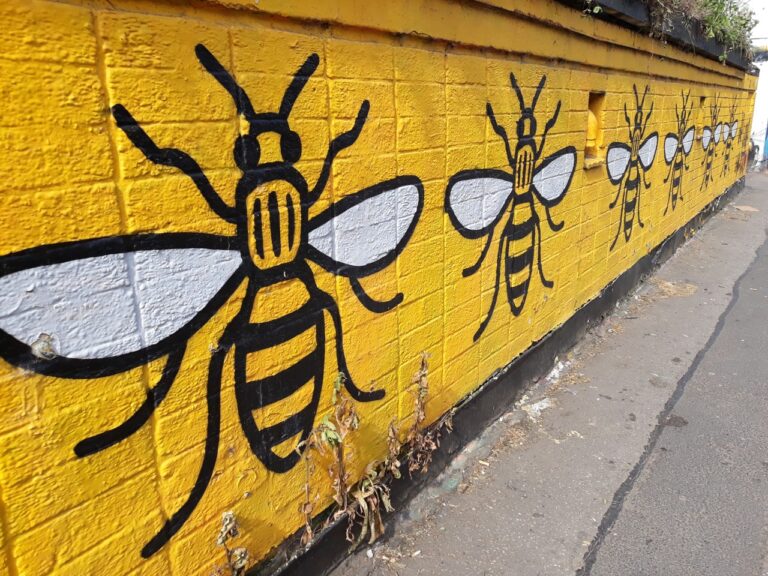
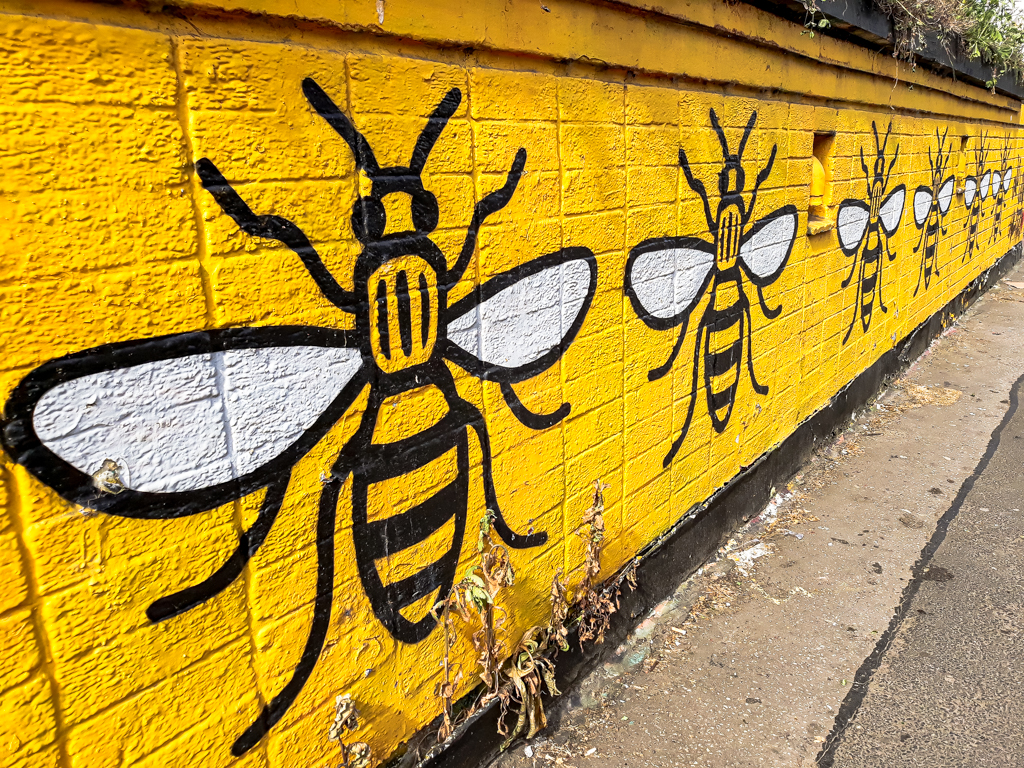
These murals change from time to time – I understand some coronavirus-related ones have popped up – but hopefully the yellow bees in Stevenson Square will still be there when you visit. The worker bee is a Manchester motif that symbolises the city’s world-famous industrial heritage: a working class town that was once at the heart of the Industrial Revolution.
Food and fashion
For a very late breakfast I dropped in to the diner-style Koffee Pot café and consumed a mountainous northern fry-up and a vast pot of tea. Perfect fuel for a shopping blitz. Down at the southern edge of the Northern Quarter is Afflecks, a labyrinthine indoor market with more than 70 independent stores wedged shoulder-to-shoulder over several floors. There are clothes, records, hairdressers – even tarot card readers. The Joy Division t-shirt I bought is getting favourable comments back home but, looking back on it, I probably didn’t need the frayed top hat.
That evening I retraced my student steps to Band On The Wall. According to its excellent and comprehensive website history, it got its nickname when 1930s licensee Ernie Tyson constructed a platform for the jazz bands suspended half way up one wall. Back then, the establishment was officially known as the George and Dragon but everyone soon began calling it The Band on the Wall. The musicians were later allowed to descend to play at ground level, much to their relief I imagine.
At the bar, I swapped stories with people I didn’t know and saw a band I had never heard of play songs I didn’t recognise. It was, as the Mancunians might say, champion!
This an amended version of an article that first appeared in Holidays for Couples magazine in Australia.
Fact File
Stay
Cow Hollow Hotel Slap bang in the heart of the Northern Quarter. Stylish, innovative and comfortable makeover of an industrial building. Cute lobby bar with good tunes and even better martinis. Adjacent streets can get noisy after the clubs shut, so bring ear plugs. 57 Newton Street, Manchester M1 1ET, tel: +44 (0) 161 228 7277, email info@cowhollow.co.uk