

Episode summary:
I drove 40 minutes south of Canberra to Tidbinbilla Nature Reserve to immerse myself in Australian nature. The reserve is alive with birds and has relaxing trails through natural forest. It’s perfect for nature mindfulness and very good for the soul.
If you’re keen to know ‘is Tidbinbilla worth visiting’, ‘what are the species of birds at the Tidbinbilla Nature Reserve’, or ‘what to see outside of Canberra’, this podcast might have some ideas for you.
Listen to a podcast about wildlife therapy in an Australian nature reserve.
Transcript – S2 E6: Wildlife therapy in an Australian reserve
This week we’re enjoying an afternoon of blissful nature mindfulness in Australia.
I always get coots and moorhens mixed up. I know one has a white beak and the others is red but I can’t seem to remember which is which. The one I’m currently admiring has a red beak and comically oversized feet, and is scratching around in the grass next to the edge of a lake. I would ask it which species it is, but I’m afraid I might offend it. Anyway, I don’t speak Coot, or Moorhen for that matter.
The glass-like surface of the lake is broken gently by a bird I can recognise – a graceful, stately black swan. It glides majestically across the water with all the poise and composure of a ballerina in a little black dress. I get the feeling it’s in charge here, doing its rounds to check everything is in place and behaving itself. It stares right at me and I sit still and upright on my bench, like I’m back in grade four and about to be told off for mucking about.
Primeval forest
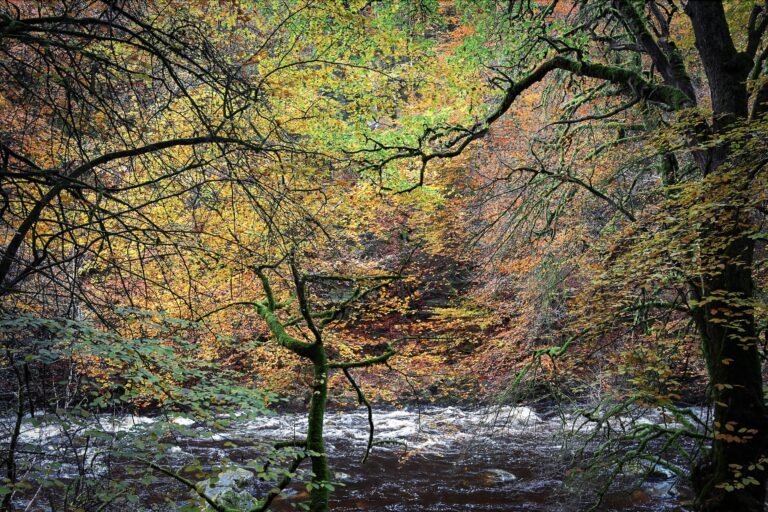
Behind the swan and the coot/moorhen, the forest begins. This is the Tidbinbilla Nature Reserve in the Brindabella Mountains. It’s one of a series of protected areas which collectively make up the 1.6 million hectare Australian Alps National Parks and Reserves. It’s one of the northern areas and just a 40-minute drive south from Australia’s capital city, Canberra. Yet it feels almost primeval. The forest is made up mainly of eucalyptus trees spaced far enough apart so the sunlight floods in and creates a satisfyingly complex canvas of colours and shapes. It’s the opposite of a neat, regimental, Nordic fir forest. Instead, it’s a bit messy; a bit of a Jackson Pollock forest, a true sign of temperate nature left to grow wild and untamed.
As you may well know, eucalypts lose their bark rather than their leaves and different types do it in different ways. Stringybarks lose theirs in long, thin strips. Paperbarks lose theirs in great sheets. Someone, somewhere, named them perfectly. The result looks a little like a photocopying room that’s been inhabited and trashed by several over-excited and under-attended koalas. There’s bark all over the place, slowly sinking down to become part of the biomass that fuels more growth and – less favourably – fuels more fires. Tidbinbilla was hit badly by the 2019–20 bushfires, with 22% of the area being burnt. But it’s made a remarkable recovery, as nature so often does, against the odds.
Ghost gums and fairy wrens
Further off, the forest thickens as it begins to climb the slopes of the Brindabellas. There’s a marvellous bushwalk near here to a rock called Gibraltar Peak. But that’s another story for another day. Higher up from here the trees change and a particularly hardy eucalypt takes over, the Ghost Gum, whose Arctic white trunks give it its name. There are rock wallabies in this forest, I’m told, and platypus in some of the lakes. But I’m already hooked on the nature I’m witnessing right now.
In a tea-tree hedge behind me I hear the unmistakable twittering of a gang of Superb Fairy Wrens. They’re one of my favourite bird species in Australia – always busy, always chatty. This group are all females, brown of colour but with a red, superhero-like flash next to their eyes. They’re feeding, hopping and dashing from branch to branch, catching what they can and chattering all the way. There’s a male, too, with the most incredible colouring. His head is several shades of metallic electric blue. He’s one of the true glammed-up rock stars of the Australian bird world. Both genders possess the tell-tale tail that sticks up at about 90 degrees and helps birdwatchers distinguish wrens.
Keep your eyes open!
My attention is suddenly drawn downward to the undergrowth where I hear something rustle and possibly even slither. I hope it is something as innocuous and harmless as a yellow-bellied water skink or blue-tongued lizard. But there’s also the chance that it’s one of the reserve’s resident snakes. There’s a sign at the entrance to the reserve – the photograph of a red-bellied black snake and a warning: ‘Do not approach!!’ It’s less venomous than other Australian snakes but that fact is not really all that comforting when you consider this country is home to probably the largest collection of venomous snakes in the world. There’s more rustling and whatever it is in there seems thankfully to be heading deeper into the bush. I can breathe again and I move slowly on along the path looking down at my feet a bit more than I was before.
But despite the risk of slithering things this reserve is magical. Centuries ago before the beginning of the deforestation which has impacted and is still impacting so many species in Australia, I wonder if it all looked as wonderful and natural as this.
© copyright Matthew Brace